.png)


Google AI Search Backlash Drives Users to DuckDuckGo

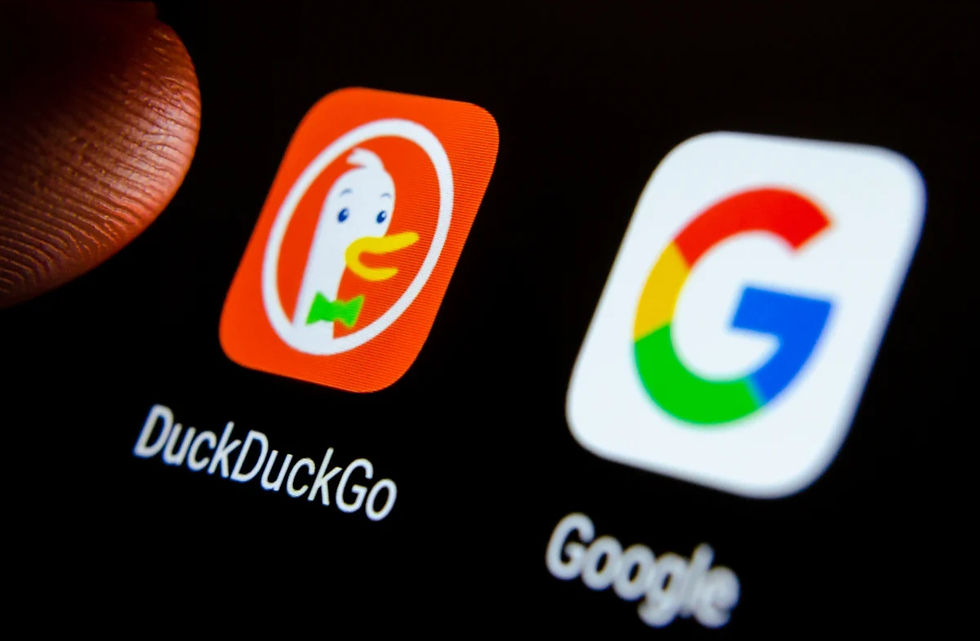
Google’s latest push to transform Search into an AI-powered experience is creating a surprising side effect: more users are turning to DuckDuckGo in search of a simpler, more traditional way to browse the web. Following Google’s announcements at its 2026 I/O developer conference, the privacy-focused search engine reported a major spike in app installs and traffic, fueled largely by users frustrated with the growing presence of AI-generated answers in Google Search.
At I/O 2026, Google introduced what it described as the biggest overhaul to Search in more than 25 years. The update expands the use of AI Overviews, conversational AI Mode, and generative search tools that can answer questions directly instead of simply displaying a list of links. The company says these features are designed to make searching faster and more helpful by anticipating user intent and allowing follow-up questions directly inside the search experience.
However, the rollout has sparked backlash from many users who feel Google is making search more complicated rather than simpler. Critics argue that AI-generated summaries often appear even for basic searches and can overwhelm straightforward queries with long explanations. Some users also worry about the reliability of AI-generated information after several widely shared incidents involving inaccurate AI responses in Google Search. Others believe the changes reduce transparency by making it harder to distinguish between original sources and AI-generated summaries.
The reaction appears to be benefiting DuckDuckGo, which has long positioned itself as a privacy-focused alternative to Google. According to the company, U.S. app installs increased by an average of 18.1% week over week between May 20 and May 25, with growth peaking at 30.5% on May 25. On iOS devices, growth was even stronger, averaging 33% and reaching nearly 70% at its peak. Third-party analytics firm Apptopia confirmed the trend, reporting a 29% increase in average daily downloads in the United States and a 12% increase globally during the same period.
Traffic to DuckDuckGo’s AI-free search page, noai.duckduckgo.com, also rose sharply. The company said visits to the page increased by an average of 22.7% week over week, with peak growth reaching 27.7% on May 24. The page disables AI-assisted answers and AI-generated images by default, giving users a more traditional search experience focused on standard web links.
DuckDuckGo CEO Gabriel Weinberg criticized Google’s approach, arguing that users should have more control over how AI is integrated into their search experience. Weinberg stated that Google is “force-feeding AI with no way to opt out” and claimed the changes are making search results “worse, not better.” He emphasized that DuckDuckGo wants users to decide “how much or how little AI they want.”
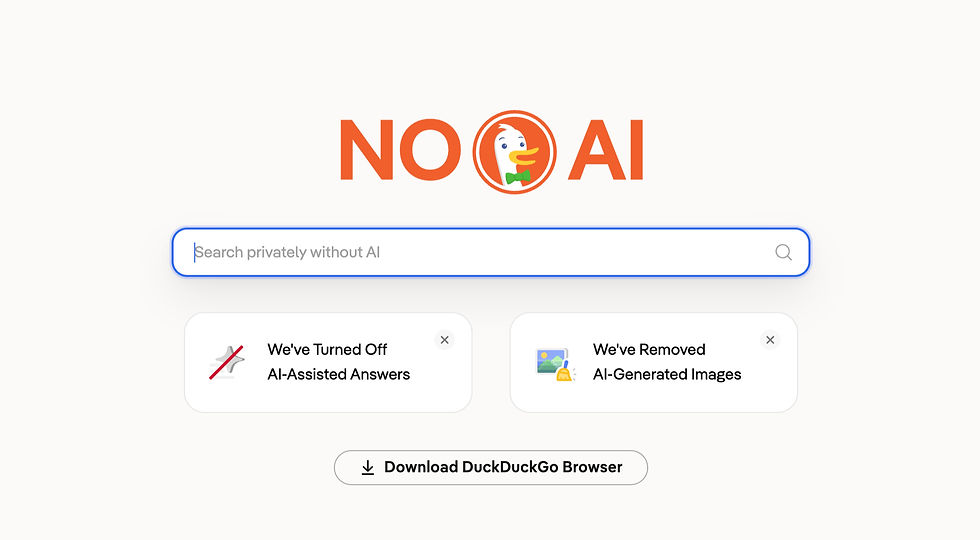
At the same time, DuckDuckGo is not completely rejecting AI technology. The company offers its own AI platform called Duck.ai, which provides access to models from OpenAI, Anthropic, Meta, and Mistral AI. Unlike many competitors, DuckDuckGo says chats are private because it removes users’ IP addresses before requests reach model providers, deletes conversations within 30 days, and does not use chats for AI training. The company also offers optional AI features such as Search Assist and an AI image filter that removes AI-generated pictures from search results.
DuckDuckGo communications chief Kamyl Bazbaz said the popularity of both AI-powered and AI-free features demonstrates that most users are not necessarily against artificial intelligence itself. Instead, many simply want more choice and control over how AI appears in their digital tools.
The controversy also highlights growing concerns among publishers and website owners. Many fear that AI-generated summaries could reduce traffic to original websites because users may no longer need to click through to read full articles. Critics argue this could weaken the broader open web ecosystem by concentrating even more control within large technology platforms.
Despite the recent surge, DuckDuckGo still holds only a small portion of the U.S. search market compared to Google’s dominance. However, the sudden increase in downloads suggests there is meaningful demand for alternatives that prioritize user choice, privacy, and a less AI-heavy experience. As major tech companies continue integrating artificial intelligence into everyday products, the debate may increasingly shift from whether AI should exist to how much control users should have over when and how they interact with it.
Works Cited
Bellan, Rebecca. “DuckDuckGo Installs Are Up 30% as Users Reject Being ‘Force-Fed’ Google’s AI Search.” TechCrunch, 26 May 2026, https://techcrunch.com/2026/05/26/duckduckgo-installs-are-up-30-as-users-reject-being-force-fed-googles-ai-search/.
Bellan, Rebecca. “DuckDuckGo Installs Surge 30% as Users Reject Google’s AI Search.” Yahoo Tech, 26 May 2026, https://tech.yahoo.com/ai/articles/duckduckgo-installs-surge-30-users-163804339.html.
“DuckDuckGo Surge: Google AI Search Backlash.” SQ Magazine, 2026, https://sqmagazine.co.uk/duckduckgo-surge-google-ai-search-backlash/.
“DuckDuckGo AI Search Backlash Image.” Mashable, 2026, https://helios-i.mashable.com/imagery/articles/00cwuQsezim2uzMX2NYKkC4/hero-image.fill.size_1200x900.v1779905428.jpg.
“DuckDuckGo NoAI Screenshot.” TechCrunch, 2026, https://techcrunch.com/wp-content/uploads/2026/05/DuckDuckGo_NoAI.png.


Comments