.png)


Will the AI Economy Create a Permanent Underclass?


The rise of artificial intelligence has sparked a growing debate about whether the AI economy will create a permanent underclass of people left behind by automation. In Silicon Valley, the mood is both excited and anxious. Top AI engineers are receiving enormous compensation offers, startups are racing to become the next major winner, and some young workers believe success in the next few years could determine their entire economic future. Behind the optimism is a fear that AI may automate large parts of white-collar work, including coding, writing, marketing, and other digital jobs that once seemed secure.
Economist Kenneth Rogoff argues that the biggest danger may not be inside Silicon Valley, but in countries that fail to secure a role in the AI supply chain. Nations such as the United States, China, South Korea, Japan, Taiwan, and parts of Europe are better positioned because they already have strengths in AI, chips, advanced manufacturing, or related infrastructure. South Korean firms like Samsung and SK Hynix have benefited from AI’s huge demand for memory chips, while Dutch company ASML remains crucial to advanced semiconductor production. Countries without similar advantages may face job losses without gaining the tax revenue or profits needed to soften the impact.
The risk is especially serious for developing regions. Many African countries still face basic infrastructure challenges, including limited access to electricity, which makes it harder to compete in AI data centres or advanced computing. Latin American countries may struggle to attract enough investment for large AI infrastructure because of low savings rates and past debt crises. Some countries could benefit from AI’s demand for minerals such as copper, lithium, nickel, cobalt, and rare earths, but natural-resource wealth does not always lead to broad prosperity. Without strong institutions, those gains may not reach ordinary citizens.
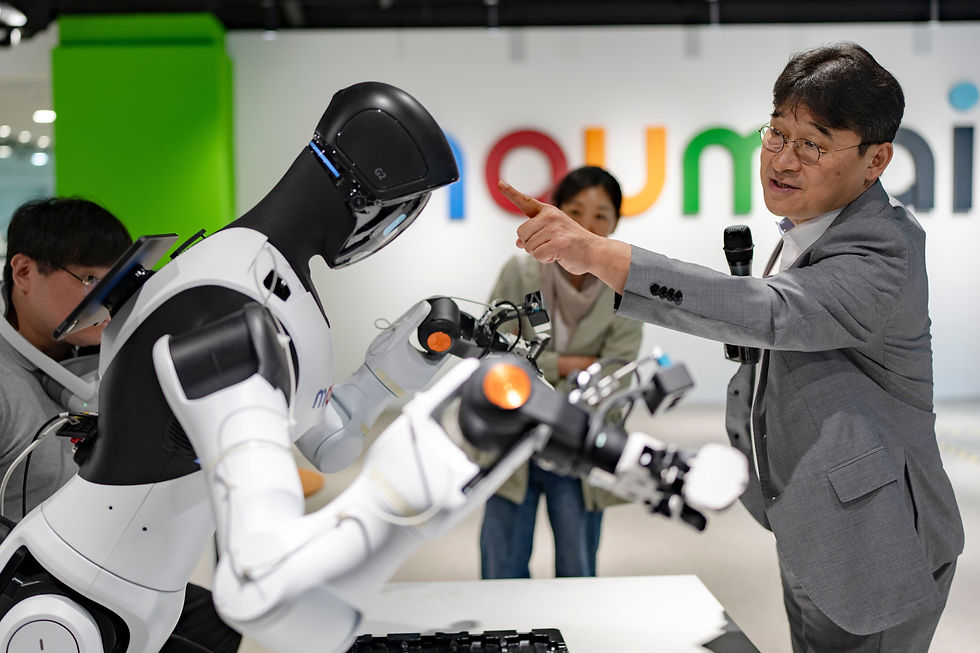
India faces a different challenge. Its large outsourcing industry could be hit hard if AI replaces mid-level white-collar work, especially tasks involving customer service, software support, and routine business operations. At the same time, India has deep technical and creative talent, meaning it could still become a major AI winner if it can keep more of that talent and build stronger domestic opportunities. China is already an AI powerhouse, but it too may face pressure if automation disrupts employment faster than its social safety net can respond.
Not everyone accepts the most pessimistic version of this future. Some argue that if AI becomes powerful enough to create huge wealth for companies, it will also become powerful enough for individuals to build new businesses, launch projects, and improve their own productivity. This view suggests that AI will not only concentrate power, but also give more people access to tools that once required large teams, expensive software, or specialized training. From this perspective, the “permanent underclass” idea underestimates human initiative and the ability of people to adapt.
Still, the fear reflects real uncertainty about the future of work. Some workers are already considering career changes into fields they see as harder to automate, such as trades, hospitality, or jobs built around human taste and physical presence. Others feel pressure to learn AI tools quickly, create content, start companies, or move closer to the technology before opportunities narrow. Whether AI creates mass unemployment, new kinds of work, or both, the central question is how societies will distribute the benefits. Without serious planning, AI could widen the gap between countries, companies, and workers who control the technology and those forced to live with its consequences.
Works Cited
Chayka, Kyle. “Will A.I. Trap You in the ‘Permanent Underclass’?” The New Yorker, 8 Oct. 2025, www.newyorker.com/culture/infinite-scroll/will-ai-trap-you-in-the-permanent-underclass.
Kantrowitz, Alex. “A Permanent AI-Driven Underclass? Maybe, But Likely Not.” Big Technology, 4 May 2026, www.bigtechnology.com/p/a-permanent-ai-driven-underclass.
Rogoff, Kenneth. “Will the AI Economy Create a Permanent Underclass?” The Guardian, 2 June 2026, www.theguardian.com/business/2026/jun/02/will-the-ai-economy-create-a-permanent-underclass.
“AI Economy and Workers.” The Guardian, 2026, i.guim.co.uk/img/media/1fe5f1ddb95275c40b568819f804bd506f87e7b5/1129_0_6630_5304/master/6630.jpg.
“AI-Driven Underclass Illustration.” Substack, 2026, substackcdn.com/image/fetch/https%3A%2F%2Fsubstack-post-media.s3.amazonaws.com%2Fpublic%2Fimages%2Fab102683-a280-404f-9719-63cec3efe372_1024x683.jpeg.


Comments