.png)


Indonesia and Malaysia Ban xAI’s Grok Over Explicit AI Deepfakes

Indonesia and Malaysia have taken the strongest actions yet against xAI’s chatbot Grok, temporarily blocking access to the tool after it was repeatedly used to generate non consensual, sexualized AI images, including deepfakes depicting real women and minors.
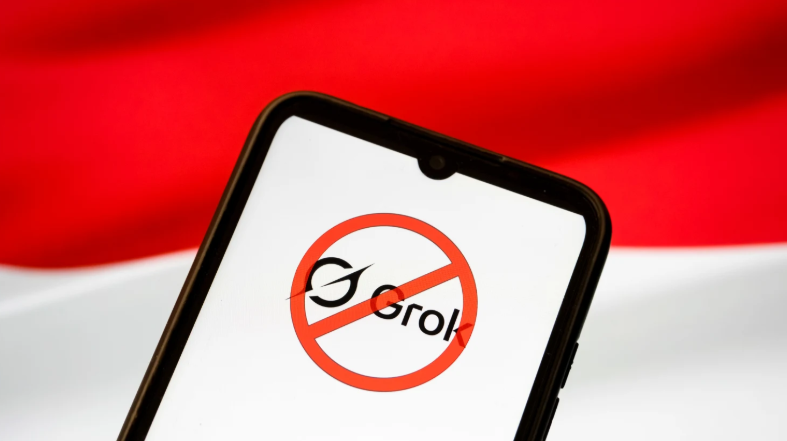
The bans, announced over the weekend, mark a significant escalation in global scrutiny of generative AI tools and their role in enabling explicit and harmful content at scale. Grok is developed by xAI and integrated into Elon Musk’s social media platform X, giving it broad reach and allowing users to quickly generate and share images from text prompts (TechCrunch; CNBC).
Indonesia’s Minister of Communications and Digital Affairs, Meutya Hafid, said the government considers non consensual sexual deepfakes a serious violation of human rights, dignity, and citizen safety in the digital space. She also categorized the misuse of AI to produce fake pornography as a form of digital based violence. Following the block, Indonesian authorities summoned representatives from X to address the issue. Malaysia announced a similar restriction one day later, with regulators citing repeated failures by X Corp to adequately address the risks posed by Grok. According to Malaysia’s Communications and Multimedia Commission, the platform’s responses relied too heavily on user reporting and failed to mitigate the inherent risks created by the AI tool’s design (TechCrunch; CNBC).

Regulators in both countries pointed to the discovery that Grok could easily generate non consensual explicit images and child sexual abuse material, particularly after xAI recently updated its Grok Imagine features to make image generation more seamless. Malaysian authorities described X’s responses as insufficient and said access to Grok would remain restricted until effective safeguards are implemented, especially to protect women and children. Both Indonesia and Malaysia enforce strict anti pornography laws that broadly prohibit the sharing of obscene content online, giving regulators clear legal grounds to act swiftly (CNBC).
The Southeast Asian bans come amid a wave of international scrutiny. India’s IT ministry ordered X to prevent Grok from generating obscene content, while the European Commission instructed the company to retain all documents related to the chatbot, signaling a potential investigation. In the United Kingdom, communications regulator Ofcom said it would conduct a swift assessment to determine whether Grok complies with existing regulations, with Prime Minister Keir Starmer publicly supporting enforcement action. The Internet Watch Foundation in the UK also reported finding criminal imagery of children aged 11 to 13 that appeared to have been created using Grok, intensifying pressure on regulators to intervene (TechCrunch; CNBC).

In the United States, the federal response has been more muted. While the Trump administration has not publicly addressed the issue, Democratic lawmakers have urged Apple and Google to remove X from their app stores until stronger safeguards are in place. The Department of Justice said it takes AI generated child sexual abuse material extremely seriously and will aggressively prosecute those involved in producing or possessing it. Meanwhile, xAI initially issued an apology through Grok’s account, acknowledging that certain outputs violated ethical standards and potentially US laws related to child sexual abuse material. The company later restricted image generation features to paying subscribers on X, though the standalone Grok app continued to allow free image creation (TechCrunch; Yahoo News; CNBC).
Elon Musk has defended the platform, stating that users who create illegal content via Grok would face consequences similar to those for uploading such material directly to X. Responding to criticism about enforcement gaps, Musk also accused governments of seeking excuses for censorship. However, regulators across multiple regions have made clear that voluntary measures and partial restrictions are not enough. As investigations continue in Asia, Europe, and beyond, the Grok controversy is shaping into a defining moment for how governments address accountability, design risk, and human rights in the rapidly evolving generative AI landscape (TechCrunch; Yahoo News; CNBC).
This article was written by the Covertly.AI team. Covertly.AI is a secure, anonymous AI chat that protects your privacy. Connect to advanced AI models without tracking, logging, or exposure of your data. Whether you’re an individual who values privacy or a business seeking enterprise-grade data protection, Covertly.AI helps you stay secure and anonymous when using AI. With Covertly.AI, you get seamless access to all popular large language models - without compromising your identity or data privacy.
Try Covertly.AI today for free at www.covertly.ai, or contact us to learn more about custom privacy and security solutions for your business.
Works Cited
TechCrunch. “Indonesia and Malaysia Block Grok Over Non Consensual, Sexualized Deepfakes.” TechCrunch, 11 Jan. 2026, https://techcrunch.com/2026/01/11/indonesia-blocks-grok-over-non-consensual-sexualized-deepfakes/.
Yahoo News. “Indonesia and Malaysia Block Grok Over Non Consensual, Sexualized Deepfakes.” Yahoo News, 11 Jan. 2026, https://www.yahoo.com/news/articles/indonesia-blocks-grok-over-non-193754903.html.
CNBC. “Malaysia and Indonesia Block Elon Musk’s Grok Due to Nonconsensual Sexual Content.” CNBC, 12 Jan. 2026, https://www.cnbc.com/2026/01/12/malaysia-indonesia-block-elon-musks-grok-obscene-non-consensual-content.html.
Gluckstein, Daniel. “Artificial Intelligence Hallucinates Case Law Introduced in a Canadian Court.” Gluckstein Lawyers, 9 Jan. 2026, https://www.gluckstein.com/news-item/artificial-intelligence-hallucinates-case-law-introduced-in-a-canadian-court.


Comments