.png)


New AI Tool Discovered By Scientists Can Detect Heart Failure Risk 5 Years Early


Artificial intelligence is opening up new possibilities in one of healthcare’s most urgent areas: detecting heart failure before it becomes a serious and potentially life threatening condition. Researchers at the University of Oxford have developed an AI tool that can predict a person’s risk of developing heart failure at least five years before it happens, giving doctors a much earlier chance to monitor patients, intervene, and possibly prevent the condition altogether.
Heart failure affects more than 60 million people worldwide and more than one million people in the UK alone. It occurs when the heart cannot pump blood around the body as effectively as it should, often because of damage to the heart muscle. The condition is frequently diagnosed too late, sometimes only when a patient is admitted to hospital. By that stage, severe damage may already have occurred. That is what makes this new AI system so significant. Rather than waiting for symptoms to become obvious, doctors may soon be able to identify warning signs years in advance.
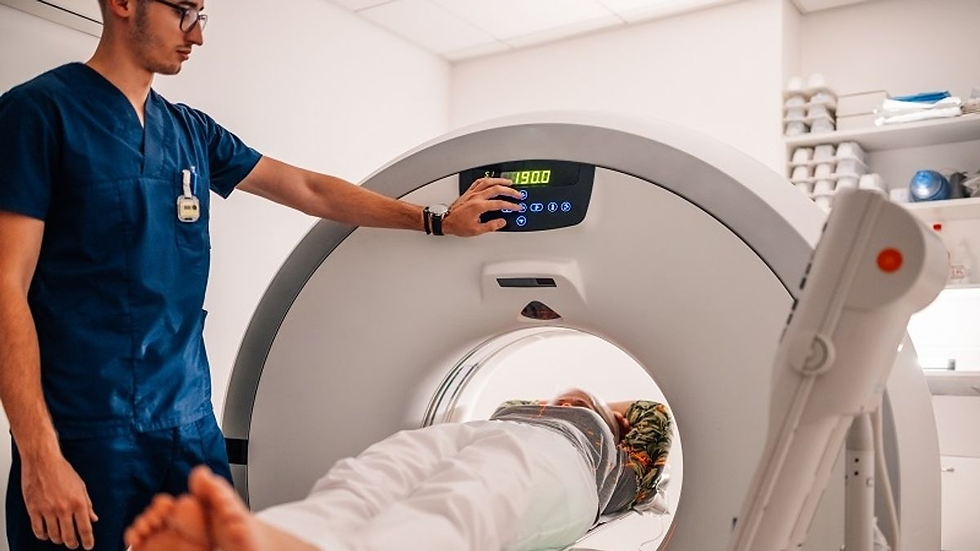
The Oxford team designed the tool to analyze routine cardiac CT scans, which are already commonly used in NHS hospitals to investigate chest pain and look for problems such as fatty plaques in the coronary arteries. Around 350,000 patients are referred for a cardiac CT scan each year in the UK, which means the technology could be applied through an existing and widely used part of clinical care. Researchers say this is the first tool able to accurately predict heart failure risk using routine cardiac CT scans.
What makes the system especially impressive is what it looks for. The AI focuses on subtle textural changes in the fat surrounding the heart. Researchers found that this fat can act almost like a sensor of early disease signals coming from the heart muscle beneath it. These changes can indicate that the heart muscle is inflamed and unhealthy, even though the warning signs are invisible to the human eye and cannot be detected through routine medical imaging tests.
The study behind the tool was large in scale. The AI was trained and validated using data from about 72,000 patients across nine NHS trusts in England, with participants followed for a decade after their scans. In one stage of the research, the algorithm was trained on more than 59,000 anonymized scans and then tested on an additional 13,424 people. The results were striking. The system predicted the risk of developing heart failure within the next five years with 86% accuracy. Patients in the highest risk group were found to be 20 times more likely to develop heart failure than those in the lowest risk group, and they had about a one in four chance of developing the condition within five years.
Researchers and heart health experts say this kind of risk score could reshape the way care is delivered. With earlier warnings, doctors could monitor high risk patients more closely and decide who needs more intensive treatment sooner. Professor Charalambos Antoniades, who led the research, said the tool can produce an absolute risk score from cardiac CT data without any human input. His team is now working to expand the method so it can be used on any chest CT scan, including lung scans, which could help identify even more at risk patients during imaging performed for other reasons. The researchers are now seeking regulatory approval to roll the technology out more broadly across the NHS.
The potential impact could be considerable. Earlier diagnosis could help patients live longer and in better health, while also easing hospital pressures by supporting prevention and earlier treatment. Experts still stress that healthy habits such as staying active, eating well, maintaining a healthy weight, avoiding smoking, limiting alcohol, and keeping blood pressure under control remain essential for heart health. Even so, this breakthrough shows how AI could become a powerful partner in modern medicine by helping doctors detect disease long before it fully develops.
Works Cited
Cousins, Joseph. “New AI Tool Can Predict Heart Failure at Least Five Years Before It Develops.” British Heart Foundation, 8 Apr. 2026, www.bhf.org.uk/what-we-do/news-from-the-bhf/news-archive/2026/april/new-ai-tool-can-predict-heart-failure-at-least-five-years-before-it-develops.
Gregory, Andrew. “Scientists Develop AI Tool to Spot Heart Failure Risk Five Years Before It Strikes.” The Guardian, 8 Apr. 2026, www.theguardian.com/society/2026/apr/08/oxford-scientists-develop-ai-tool-spot-heart-failure.
Thornton, Lucy. “New AI Tool Can Spot Heart Disease Five Years Before It Develops.” Daily Mirror, 8 Apr. 2026, www.mirror.co.uk/news/health/new-ai-tool-can-spot-36986095.
Healthline Editorial Team. “Abdominal CT Scan with Contrast: Purpose, Risks, and More.” Healthline, 24 Apr. 2025, www.healthline.com/health/abdominal-ct-scan.
Choon Pin, Lim. “Understanding Heart Failure: Causes, Symptoms, and Management.” The Heart & Vascular Centre, 2 Sept. 2024, www.heartvascularcentre.com/heart-failure/understanding-heart-failure-causes-symptoms-and-management.


Comments