.png)


Can AI Outperform Doctors? The Future of Medical AI


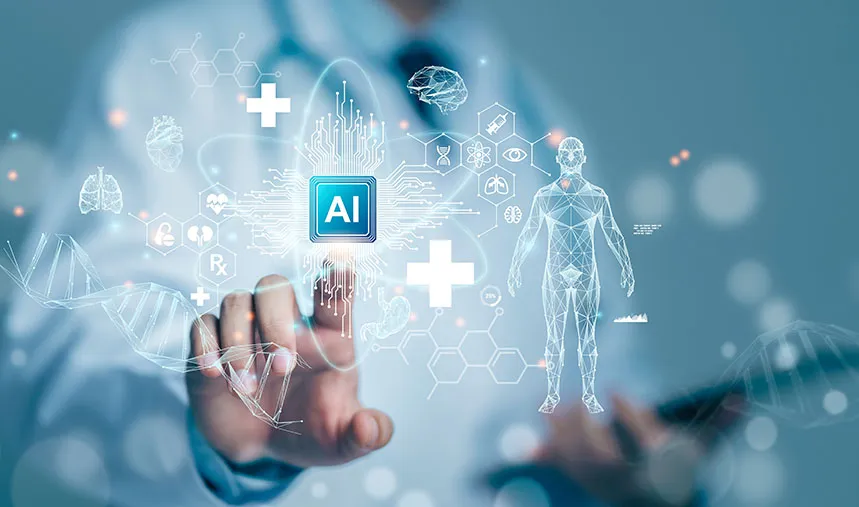
Artificial intelligence is becoming a larger part of health care, raising an important question: can AI outperform doctors? Across diagnostics, drug discovery, patient support, and medical research, AI is already being used to analyze data, support clinical decisions, and make health information more accessible. Some experts believe patients should use AI more often for basic health questions, while others warn that the technology still requires careful oversight. The debate is not simply about whether AI is powerful, but whether it can be trusted in situations where accuracy, safety, privacy, and human judgment matter.
Alex Zhavoronkov, founder and CEO of AI drug discovery company Insilico Medicine, argues that people should be using AI much more than they currently do. Speaking at CNBC’s CONVERGE LIVE event in Singapore, he said some consumer AI models are already close to the capability level of doctors and, in some cases, may perform better for basic questions. He suggested that AI could help people with simple health decisions, such as what to eat or whether to diet, saving time that would otherwise be spent with a doctor. At the same time, companies such as OpenAI and Amazon are introducing health-related tools for consumers, including ChatGPT Health and Amazon’s HealthAI tool for One Medical members.
Still, experts are cautious about putting advanced health technology into the hands of people who may not fully understand how to use it. Shreehas Tambe, CEO and managing director of Biocon, said he is cautiously optimistic about AI in health care but warned that misuse could lead to more errors than benefits. He emphasized that new users face a learning curve and that AI systems should be validated by trained professionals. This is especially important in drug discovery, where AI can speed up research but still needs scientists to confirm whether models are producing useful and safe results.

AI’s potential in medical diagnostics is especially strong because it can process large amounts of complex data quickly. AI tools can analyze X-rays, MRIs, CT scans, electrocardiograms, brain signals, patient records, and other medical data to help detect disease earlier and support treatment planning. In infectious disease care, AI has been used to predict antimicrobial resistance, identify bloodstream infections in intensive care units, improve antibiotic prescribing, and detect bacterial resistance. Researchers have also used generative AI to discover new antibiotic molecules, while image-based AI systems have helped classify Gram-stain patterns and support faster diagnosis.
Compared with human doctors, AI offers clear strengths in speed, consistency, and pattern recognition. It can generate possible diagnoses in seconds, reduce wait times, and support health systems in areas with limited access to specialists. However, doctors still bring qualities AI does not have, including empathy, intuition, contextual understanding, physical examination skills, and the ability to interpret complex or unclear cases. AI may perform well in structured tasks, but human clinicians remain essential when symptoms are unusual, emotional support is needed, or treatment decisions require broader judgment.
The biggest concerns around AI in health care involve accuracy, bias, privacy, regulation, and responsibility. AI systems depend on large, high-quality datasets, and if those datasets are incomplete or biased, the results can be unfair or inaccurate. Patient data also raises serious privacy and consent concerns. Regulatory frameworks such as the GDPR, Medical Device Regulation, and EU AI Act aim to improve transparency, accountability, and safety, especially because AI medical tools are considered high risk. Ultimately, AI is not likely to replace doctors in the near future. Its strongest role is as a tool that supports medical professionals, improves efficiency, accelerates research, and helps patients make more informed decisions while keeping humans in control.
Works Cited
Handley, Lucy. “Can AI Outperform Doctors? Experts Weigh the Pros and Cons.” CNBC, 28
Apr. 2026, www.cnbc.com/2026/04/29/can-ai-outperform-doctors-insilico-medicine-biocon-ceos-weigh-in.html.
The Tech Buzz. “Can AI Outperform Doctors? Experts Weigh the Pros and Cons.” Tech Buzz, 29 Apr. 2026, www.techbuzz.ai/articles/can-ai-outperform-doctors-experts-weigh-the-pros-and-cons.
Malesu, Vijay Kumar. “Can AI Outperform Doctors in Diagnosing Infectious Diseases?” News-Medical, 26 Mar. 2025, www.news-medical.net/health/Can-AI-Outperform-Doctors-in-Diagnosing-Infectious-Diseases.aspx.
Hawkins, Joshua. “AI Doctor Looks at Records.” BGR, 7 May 2024, www.bgr.com/tech/google-built-medical-ai-that-can-train-itself-and-outperform-real-doctors/.
CHIEW. “Artificial Intelligence. Doctor Using Technology Smart Robot AI.” News-Medical, 26 Mar. 2025, www.news-medical.net/health/Can-AI-Outperform-Doctors-in-Diagnosing-Infectious-Diseases.aspx.


Comments