.png)


James Cameron Stands With Actors: Can AI Ever Match Real Emotion?

James Cameron, long celebrated for advancing cinematic technology through groundbreaking visual effects, has drawn a sharp line between the innovations behind his “Avatar” films and the rise of generative artificial intelligence.
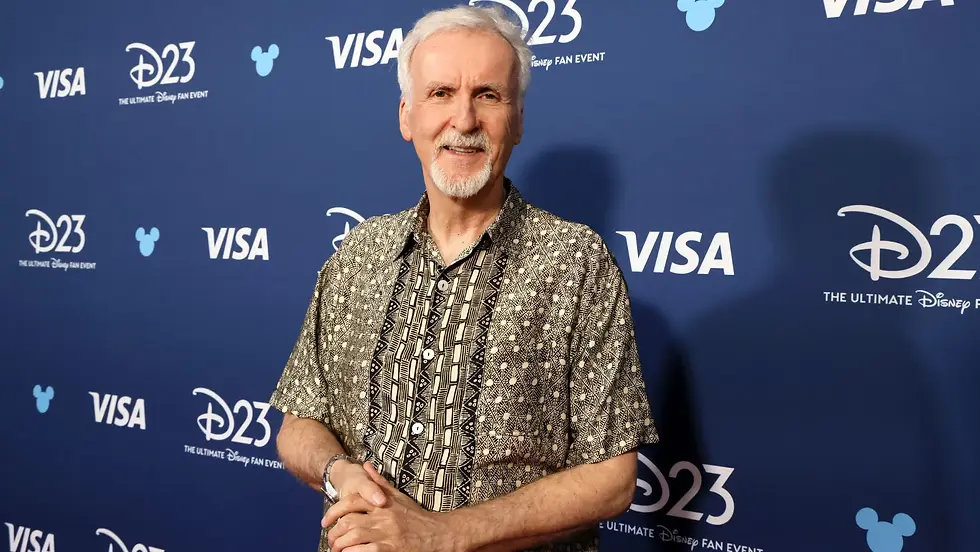
In a recent CBS Sunday Morning interview promoting “Avatar: Fire and Ash,” the director emphasized that while his movies often appear at the cutting edge of computer-driven filmmaking, the philosophy behind them is fundamentally at odds with current genAI tools that can fabricate performances from scratch (TechCrunch). Cameron clarified that performance capture, the technique used to bring the Na’vi characters to life, depends on real actors whose movements and emotional nuances are simply translated into digital form. Rather than diminishing the role of performers, he argued, it elevates their craft by preserving the essential collaboration between actor and director.
Cameron noted that early in the 2000s, during development of the first “Avatar,” many in Hollywood suspected he was pushing toward replacing actors altogether. He recalled repeatedly confronting assumptions that he was “doing something strange with computers” to phase out human performers, a notion he dismissed as a misunderstanding of the technology and intention behind the work (Yahoo News). In reality, he explained, performance capture exists to honor the authenticity of live actors. A CBS segment accompanying the interview underscored this point by showing the cast performing elaborate underwater scenes inside a massive 250,000 gallon water tank, capturing every detail of their movement before artists translated them into the world of Pandora.

What Cameron finds disturbing is not the skepticism he faced two decades ago but the direction he sees the industry moving now. Generative AI, capable of producing entire characters, actors, and performances from a simple text prompt, represents, in his words, “the opposite” of what he strives for in filmmaking. The idea that an AI system can invent an actor out of thin air and craft an emotional performance without any human input is “horrifying,” he said, because it cuts out the artistic core of the filmmaking process and threatens to commodify the human aspects of creation (Variety).
His concerns come amid real developments in AI-driven acting. At the Zurich Summit in September, comedian and producer Eline Van der Velden unveiled Tilly Norwood, an entirely AI-generated performer that allegedly attracted interest from major talent agencies. The reveal sparked swift backlash from actors and industry leaders, many of whom view such creations as a potential threat to creative labor. Van der Velden, however, argued that AI’s role in filmmaking is inevitable. She predicted that within a year, audiences would begin seeing more effects, establishing shots, and second unit material generated by AI, eventually leading to fully AI-made films. Whether or not viewers embrace such content, she suggested, will ultimately depend less on the technology and more on the storytelling behind it (Variety).
Cameron’s stance highlights a defining tension in modern filmmaking: the balance between innovation and the preservation of human artistry. While he has spent decades pioneering digital tools that expand cinematic possibilities, he maintains that technology should support, not replace, the people who bring stories to life. As genAI continues to evolve, this debate is likely to intensify, raising important questions about authorship, authenticity, and the future of performance itself. For Cameron, the answer is clear. The integrity of film depends on the irreplaceable connection between actor and director, not on the synthetic creations of a machine.
This article was written by the Covertly.AI team. Covertly.AI is a secure, anonymous AI chat that protects your privacy. Connect to advanced AI models without tracking, logging, or exposure of your data. Whether you’re an individual who values privacy or a business seeking enterprise-grade data protection, Covertly.AI helps you stay secure and anonymous when using AI. With Covertly.AI, you get seamless access to all popular large language models - without compromising your identity or data privacy.
Try Covertly.AI today for free at www.covertly.ai, or contact us to learn more about custom privacy and security solutions for your business.
Works Cited
“‘Avatar’ Director James Cameron Says Generative AI Is ‘Horrifying.’” TechCrunch, 30 Nov. 2025, www.techcrunch.com/2025/11/30/avatar-director-james-cameron-says-generative-ai-is-horrifying.
“‘Avatar’ Director James Cameron Says Generative AI Is ‘Horrifying.’” Yahoo News, 2025, tech.yahoo.com/ai/articles/avatar-director-james-cameron-says-225315485.html.
Kroll, Justin. “James Cameron Says It’s ‘Horrifying to Me’ that AI Can ‘Make Up an Actor.’” Variety, 2025, www.variety.com/2025/film/news/james-cameron-horrifying-ai-replace-actors-1236595864.
Smith, Anna. “James Cameron Embraces AI in Filmmaking, Saying His Next Film Will Carry a No-Gen-AI Title Card.” The Outpost, 2025, www.hollywoodreporter.com/business/business-news/james-cameron-generative-ai-filmmaking-text-prompts-1236186102/.
Benullo, Cyndal. “Complete Guide to Pandora – The World of Avatar at Disney World.” EatSleepDisney, 2 June 2025, www.eatsleepdisney.com/pandora-the-world-of-avatar/.
Varaljay, Gabriel. “The Dawn of AI-Generated Cinema: How Text-to-Video Technology Is Reshaping Hollywood.” Medium, 2023, www.medium.com/kinomoto-mag/the-dawn-of-ai-generated-cinema-how-text-to-video-technology-is-reshaping-hollywood-1d3da0c99868.


Comments