.png)


Google Unveils its own version of Apple’s AI cloud

Updated: Nov 18, 2025

Google’s latest announcement signals a major shift in how advanced AI features will be delivered to everyday users. With the debut of Private AI Compute, the company is introducing a cloud-based processing system built to offer the intelligence of its most powerful Gemini models while preserving the privacy traditionally associated with on-device computing. The move closely mirrors Apple’s Private Cloud Compute, highlighting how both tech giants are rethinking the balance between computational power and user privacy in an era where AI is becoming deeply personal (Artificial Intelligence News; The Verge; Yahoo Tech).
AI tools are rapidly evolving from simple assistants to systems capable of proactive, context-aware support. They now anticipate needs, understand preferences, and process complex requests in real time. But these capabilities demand computational power that exceeds what most consumer devices can provide. Google argues that running all AI processes directly on phones, laptops, and tablets is no longer sustainable as the sophistication of these tools grows. Private AI Compute is its proposed solution: a secure cloud environment that allows demanding AI tasks to be offloaded without exposing personal data (The Verge).
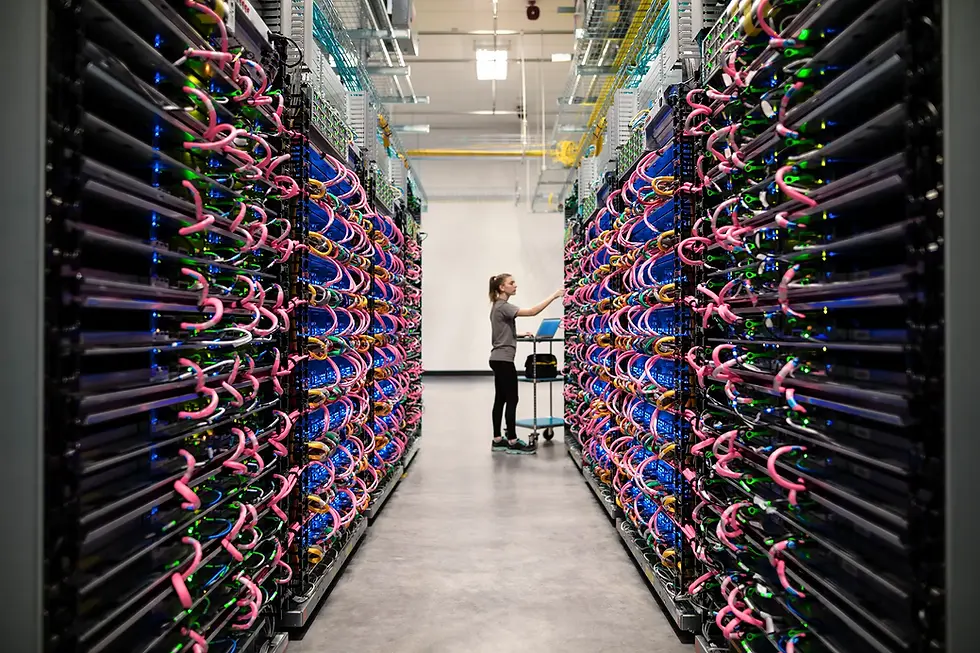
What sets this platform apart is its emphasis on privacy and trust. Google describes Private AI Compute as a “protected computing environment” that isolates data during processing so that it remains accessible only to the user, not even Google engineers can see it (Artificial Intelligence News). The system relies entirely on Google’s unified tech stack, including custom Tensor Processing Units and new Titanium Intelligence Enclaves, which provide hardware-level security. Before data enters the cloud, it passes through encrypted, remotely attested channels to verify that it’s being sent to a safe and verified environment. Once inside, it stays sealed off, processed only by the models and never stored or viewed by the company (Artificial Intelligence News; Yahoo Tech).
This approach builds on Google’s broader responsible AI frameworks, including its Secure AI Framework, AI Principles, and Privacy Principles, reinforcing the company’s long-stated commitment to user control and data protection. By designing a system with what it calls “zero access assurance,” Google aims to give users the advantages of cloud-powered AI without forcing them to choose between performance and privacy (Artificial Intelligence News).
The practical implications are already emerging. Pixel 10 devices will use Private AI Compute to enhance features like Magic Cue, which provides contextual suggestions drawn from apps like email and calendar. With cloud support, those suggestions can become more relevant, timely, and personalized. Google’s Recorder app will also benefit, gaining the ability to summarize transcriptions in a wider range of languages, tasks that would be difficult or slow to perform entirely on device (The Verge; Yahoo Tech).
These examples illustrate Google’s broader vision: AI experiences that are more capable, more personal, and still fully private. As models become better at proactive assistance, surfacing reminders, anticipating next steps, or helping manage daily tasks, users increasingly expect transparency and control. Private AI Compute is meant to meet that expectation by keeping sensitive conversations, emails, and company data out of reach while still enabling the intelligence of large-scale cloud models (Yahoo Tech).

Google emphasizes that this rollout is “just the beginning,” with plans to expand Private AI Compute across more products and features over time (Artificial Intelligence News; The Verge). The system represents what the company calls a next stage in responsible innovation, one where powerful AI doesn’t require users to compromise on privacy. As large-scale AI continues to integrate into everyday life, systems like Private AI Compute could shape the standard for how companies balance capability and confidentiality.
This article was written by the Covertly.AI team. Covertly.AI is a secure, anonymous AI chat that protects your privacy. Connect to advanced AI models without tracking, logging, or exposure of your data. Whether you’re an individual who values privacy or a business seeking enterprise-grade data protection, Covertly.AI helps you stay secure and anonymous when using AI. With Covertly.AI, you get seamless access to all popular large language models - without compromising your identity or data privacy.
Try Covertly.AI today for free at www.covertly.ai, or contact us to learn more about custom privacy and security solutions for your business.
Works Cited
Artificial Intelligence News. “Google Reveals Its Own Version of Apple’s AI Cloud.” Artificial Intelligence News, https://www.artificialintelligence-news.com/news/google-reveals-its-own-version-of-apple-ai-cloud/.
The Verge. “Google Is Introducing Its Own Version of Apple’s Private AI Cloud Compute.” The Verge, https://www.theverge.com/news/818364/google-private-ai-compute.
Yahoo Tech. “Google Unveils Private AI Compute, Its Answer to Apple’s Private Cloud Compute.” Yahoo Tech, https://tech.yahoo.com/ai/gemini/articles/google-unveils-private-ai-compute-230708265.html.
Google. “Introducing Private AI Compute.” Google Blog, 15 May 2024, https://blog.google/technology/ai/google-private-ai-compute/.
Vincent, James. “Google’s New Tensor Processing Unit Will Power the Future of AI.” The Verge, 17 May 2017, https://www.theverge.com/2017/5/17/15649628/google-tensor-processing-unit-tensorflow-ai-training-system.
van de Rakt, Marieke. “Google AI Mode: What It Means for SEO.” Yoast, 2024, https://yoast.com/google-ai-mode/.


Comments