.png)


Apple’s AI Future Begins as John Ternus Takes Over as CEO

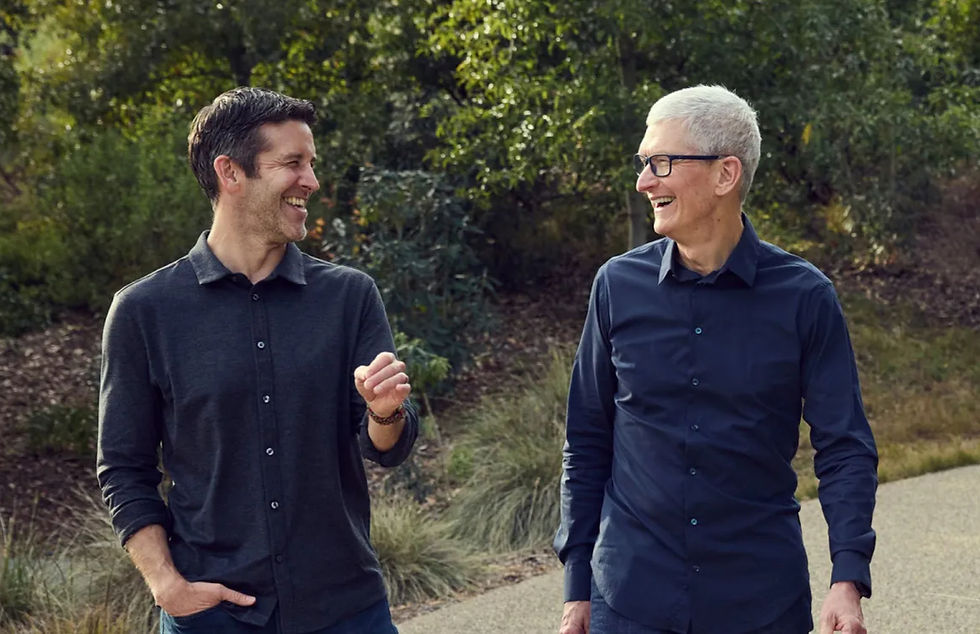
Apple is entering a major new chapter. After 15 years as CEO, Tim Cook will step down later this year, and longtime Apple executive John Ternus will take over on September 1. The change is not just a routine leadership handoff. It reflects a pivotal moment for Apple as artificial intelligence becomes one of the biggest forces shaping the future of technology. For a company built on defining major product categories, the pressure is now on to show what its AI era will look like and how that future will drive growth.
Cook leaves behind one of the strongest legacies in modern business. Under his leadership, Apple turned the iPhone into the foundation for a much broader empire that includes wearables, digital services, and health-focused offerings. That success helped push Apple to a roughly $4 trillion valuation and made it one of the most influential companies in the world. But investors are now looking beyond the iPhone era and asking what comes next. Apple has released AI-powered features across the iPhone, Mac, and iPad, including tools for summarizing messages, editing photos, generating images, and translating languages, yet it still has not fully explained how AI will become a major business engine.
That challenge now belongs to Ternus, a 51-year-old executive who has spent 25 years at Apple. He joined the company’s product design team in 2001 and rose through the ranks to become senior vice president of hardware engineering in 2021. Over the years, he has helped lead the development of major products including AirPods, Apple Watch, Vision Pro, and multiple generations of the iPhone. He also played a role in one of Apple’s biggest technical shifts, the transition from Intel chips to Apple silicon. More recently, he helped oversee the MacBook Neo, a new lower-cost laptop that used smart hardware trade-offs while still aiming to preserve Apple’s quality standards.

At first glance, Ternus may seem like an unexpected choice for an AI-driven future because his background is rooted in hardware rather than software. But that may be exactly why Apple chose him. Apple’s strength has long come from tightly connecting hardware, software, and chips into one system, giving it more control than competitors that rely on outside chipmakers. As AI becomes more embedded in everyday devices, that integration could become even more important. Analysts believe Ternus’ hardware expertise could help Apple push further into new AI-focused products such as smart glasses, camera-equipped AirPods, pendants, and other devices designed around a new kind of user experience.
Still, Ternus is stepping into the role at a difficult time. Apple faces stronger AI competition, concerns about the slower pace of its generative AI rollout, and growing pressure to prove that its software improvements can turn into a true AI-led device experience. The company has also recently lost its spot as the world’s most valuable company to Nvidia, whose rise has been driven by the AI boom. At the same time, Ternus will have to deal with political and economic pressures, including tariffs, supply chain concerns, and calls from the Trump administration to bring more manufacturing back to the United States. Analysts expect Apple to avoid the aggressive AI spending seen elsewhere in Big Tech, but they will be watching closely for signs of a stronger long-term strategy.
What makes Ternus especially intriguing is that he appears to pair technical depth with humility and attention to detail. In a commencement speech at the University of Pennsylvania, he spoke about the value of being confident enough to push forward while humble enough to ask questions. That attitude, along with his long history inside Apple, may help steady the company in the short term. But his legacy will likely be defined by something bigger: whether he can turn Apple’s hardware heritage into a bold AI vision that keeps the company from becoming just a platform for other firms’ technologies. If he succeeds, he could shape Apple’s next decade. If he does not, the company risks falling behind in the most important tech race of the moment.
Works Cited
Eadicicco, Lisa. “Apple’s Pick to Replace Tim Cook Hints at Its Plans for the AI Era.” CNN, 21 Apr. 2026, www.cnn.com/2026/04/21/tech/apple-new-ceo-ai-john-ternus.
Reuters. “Apple’s Post-Cook Future Hinges on Whether Ternus Can Ignite AI Growth.” BNN Bloomberg, 21 Apr. 2026, www.bnnbloomberg.ca/business/company-news/2026/04/21/apples-post-cook-future-hinges-on-whether-ternus-can-ignite-ai-growth/.
Silberling, Amanda. “Who Is John Ternus, the Incoming Apple CEO?” TechCrunch, 20 Apr. 2026, www.techcrunch.com/2026/04/20/who-is-john-ternus-the-incoming-apple-ceo/.
Hall, Zac. “Tim Cook Stepping Down This Year, John Ternus Confirmed as Next Apple CEO.” 9to5Mac, 20 Apr. 2026, 9to5mac.com/2026/04/20/apple-ceo-tim-cook-stepping-down-john-ternus-confirmed-as-new-apple-ceo/.
“Introducing Apple Intelligence for iPhone, iPad, and Mac.” Apple Newsroom, Apple, 10 June 2024, www.apple.com/ca/newsroom/2024/06/introducing-apple-intelligence-for-iphone-ipad-and-mac/.


Comments